NCBI Bookshelf. A service of the National Library of Medicine, National Institutes of Health.

Pagon RA, Bird TD, Dolan CR, et al., editors. GeneReviews™ [Internet]. Seattle (WA): University of Washington, Seattle; 1993-.

Bookshelf ID: NBK1121PMID: 20301300

Hutchinson-Gilford Progeria Syndrome

HGPS, Hutchinson Gilford Syndrome

Leslie B Gordon, MD, PhD, W Ted Brown, MD, PhD, and Francis S Collins, MD, PhD.

Author Information
Leslie B Gordon, MD, PhD
Department of Pediatrics
Alpert Medical School of Brown University
Providence, Rhode Island
Leslie_Gordon/at/brown.edu
W Ted Brown, MD, PhD
Director, New York State Institute for Basic Research
Staten Island, New York
wtbibr/at/aol.com
Francis S Collins, MD, PhD
Director, National Institutes of Health
Bethesda, Maryland
Francis.Collins/at/nih.gov

Initial Posting: December 12, 2003; Last Update: January 6, 2011.

Summary

Disease characteristics. Hutchinson-Gilford progeria syndrome (HGPS, progeria) is characterized by clinical features that develop in childhood and resemble some features of accelerated aging. Although signs and symptoms vary in age of onset and severity, they are remarkably consistent overall. Children with HGPS usually appear normal at birth. Profound failure to thrive occurs during the first year. Characteristic facies, with receding mandible, narrow nasal bridge and pointed nasal tip develop. During the first to third year the following usually become apparent: partial alopecia progressing to total alopecia, loss of subcutaneous fat, progressive joint contractures, bone changes, nail dystrophy, and abnormal tightness and/or small soft outpouchings of the skin over the abdomen and upper thighs, and delayed primary tooth eruption. Later findings include low-frequency conductive hearing loss, dental crowding, and partial lack of secondary tooth eruption. Additional findings present in some but not all affected individuals include photophobia, excessive ocular tearing, exposure keratitis, and Raynaud phenomenon. Motor and mental development is normal. Death occurs as a result of complications of severe atherosclerosis, either cardiac disease (myocardial infarction) or cerebrovascular disease (stroke), generally between ages six and 20 years. Average life span is approximately 13 years.

Diagnosis/testing. The diagnosis is based on recognition of common clinical features and detection of either the c.1824C>T (p.Gly608Gly) heterozygous LMNA mutation in the classic form of HGPS or one of three of the heterozygous LMNA mutations c.1822 G>A (p.Gly608Ser), c.1821 G>A (p.Val607Val), or c.1968+1G>A in atypical HGPS. Molecular genetic testing of LMNA, the only gene known to be associated with HGPS, is available on a clinical basis.

Management. Treatment of manifestations: A regular diet with frequent small meals is recommended. Treatment for an abnormal lipid profile includes exercise as cardiovascular and neurologic status allow, diet modification, and medication such as statins as warranted. Routine physical and occupational therapy, active stretching and strengthening exercises, and hydrotherapy are recommended. Medication dosages are based on body weight or body surface area, not age. General anesthesia and intubation should be used with caution. Because the stiffened peripheral vasculature may be less tolerant to dehydration, maintaining optimal hydration orally is recommended. Anticongestive therapy is routine for congestive heart failure. Hip dislocation is best managed with physical therapy and body bracing; surgery involving bones should be avoided if possible. Primary tooth extractions may be required to avoid dental crowding. Shoe pads are recommended, as lack of body fat leads to foot discomfort. Use of sunscreen on all exposed areas of skin, including the head, is recommended for outdoor activities. Age-appropriate schooling is usually recommended.

Prevention of secondary complications: Low-dose aspirin (2-3 mg/kg body weight) is recommended.

Surveillance: annual or semi-annual electrocardiogram (ECG), annual echocardiogram, carotid duplex ultrasound examination, neurologic examination, MRI/MRA of the head and neck, lipid profile, dental examination, audiometry, ophthalmology examination, dual X-ray absorptiometry to measure bone density, hip x-ray to evaluate for avascular necrosis and progressing coxa valga, assessment for joint contractures, and assessment of activities of daily living.

Agents/circumstances to avoid: dehydration; large crowds with taller/larger peers because of the risk of injury.

Genetic counseling. Almost all individuals with HGPS have the disorder as the result of a de novo autosomal dominant mutation. Because HGPS is typically caused by a de novo mutation, the risk to the sibs of a proband is small. However, because one instance of apparent somatic and germline mosaicism has been reported, the recurrence risk for parents of a child with HGPS may be on the order of one in 500. Because of the (unlikely) possibility of recurrence as a result of germline mosaicism in one of the parents, prenatal testing is available.

Diagnosis

Clinical Diagnosis

The diagnosis of classic Hutchinson-Gilford progeria syndrome (HGPS, progeria) is based on recognition of common clinical features and detection of the classic c.1824C>T (p.Gly608Gly) heterozygous LMNA mutation; the diagnosis of atypical HGPS is made in individuals with more or less severe features or the non-classic LMNA mutations, for example, c.1822 G>A (p.Gly608Ser), c.1821G>A (p.Val607Val), or c.1968+1G>A.

Individuals having the p.Gly608Gly LMNA silent mutation and most of the following features after age three years are considered to have the classic Hutchinson-Gilford progeria syndrome:

  • Growth
    • Short stature (<3rd percentile), lifelong
    • Weight (<3rd percentile), lifelong
    • Weight distinctly low for height
    • Head disproportionately large for face
    • Thin, high-pitched voice
  • Body fat. .Diminished subcutaneous fat globally, with the following sequellae:
    • Prominent scalp veins
    • Prominent veins over most of body
    • Irregular small outpouchings of skin over lower abdomen and/or proximal thighs
    • Circumoral cyanosis
    • Prominent eyes
    • Lack of ear lobes, in some but not all cases
  • Skin/hair/nails
    • Taut, dry skin that is variably pigmented (spotty)
    • "Sclerodermatous" skin over lower abdomen and proximal thighs
    • Generalized alopecia with sparse downy hairs on the occiput
    • Loss of eyebrows and sometimes eyelashes
    • Dystrophic fingernails and toenails
    • Lagophthalmos (the inability to fully close the eye) and, in a minority of cases, corneal ulceration
    • Thin lips
  • Teeth
    • Delayed eruption of primary teeth
    • Delayed loss of erupted primary teeth
    • Partial secondary tooth eruption
    • Dental crowding as a result of small mouth, lack of primary tooth loss, and secondary tooth eruption behind primary teeth
  • Skeletal system/joints
    • Narrow nasal bridge, pointed nasal tip
    • Osteolysis of the distal phalanges
    • Delayed closure of the anterior fontanelle
    • Pear-shaped thorax
    • Retrognathia and micrognathia
    • Short, dystrophic clavicles
    • Osteoarthritis
    • "Horse-riding" stance and wide-based, shuffling gait
    • Coxa valga
    • Low bone density
    • Thin limbs
    • Tightened joint ligaments globally but variable in severity
  • Cardiovascular/neurovascular
    • Severe progressive atherosclerosis with variable age of clinical manifestation resulting in:
      • Cardiac manifestations: angina, congestive heart failure, myocardial infarction
      • Stroke, including transient ischemic attacks and silent strokes that are seen on MRI or CT of the head but do not manifest as clinical deficits
    • Raynaud phenomenon in fingers of some but not all individuals
  • Audiologic. Low-frequency conductive hearing loss
  • Endocrine
    • Failure to complete secondary sexual development
    • Low serum leptin concentration
    • Insulin resistance in up to 50% of individuals. Note that frank diabetes mellitus is unusual.

Molecular Genetic Testing

Gene. LMNA is the only gene in which mutation is known to be causative for HGPS.

As per the definition of HGPS used in this GeneReview, only four causative heterozygous mutations in LMNA are recognized:

  • Classic HGPS. c.1824C>T transition in exon 11 results in a silent Gly-to-Gly change at codon 608 (p.Gly608Gly). This silent change results in increased usage of an internal cryptic spice site resulting in an in-frame deletion of 150 nucleotides and 50 amino acids from the lamin A protein.
  • Atypical HGPS. c.1822G>A (p.Gly608Ser), c.1821G>A (p.Val607Val), or c.1968+1G>A

Clinical testing

Table 1. Summary of Molecular Genetic Testing Used in Hutchinson-Gilford Progeria Syndrome

Gene SymbolTest MethodMutations DetectedMutation Detection Frequency 1Test Availability
LMNATargeted mutation analysisc.1824C>T100% 2Clinical
Image testing.jpg
Sequence analysis of the coding and intronic regionsSequence variants 3 throughout the gene, including c.1824C>T, c.1822 G>A, c.1821G>A, and c.1968+1G>ASee footnote 4
Deletion/duplication analysisGene deletionNot relevant to HGPS 5

Test Availability refers to availability in the GeneTests Laboratory Directory. GeneReviews designates a molecular genetic test as clinically available only if the test is listed in the GeneTests Laboratory Directory by either a US CLIA-licensed laboratory or a non-US clinical laboratory. GeneTests does not verify laboratory-submitted information or warrant any aspect of a laboratory's licensure or performance. Clinicians must communicate directly with the laboratories to verify information.

1. The ability of the test method used to detect a mutation that is present in the indicated gene

2. Classic Hutchinson-Gilford progeria syndrome (HGPS, progeria) is defined by the presence of LMNA mutation c.1824C>T.

3. Examples of mutations detected by sequence analysis may include small intragenic deletions/insertions and missense, nonsense, and splice site mutations.

4. Detects the common mutations that define atypical HGPS and also detects other sequence variants.

5. One rare case of a progeroid syndrome other than HGPS. See Molecular Basis of Disease for an explanation.

Interpretation of test results. For issues to consider in interpretation of sequence analysis results, click here.

Testing Strategy

To confirm the diagnosis in a proband

  • Establish the clinical diagnosis based on age-related findings (see Clinical Diagnosis).
  • Molecular genetic testing of LMNA confirms the diagnosis; either:
    • Targeted mutation analysis for the mutation associated with classic HGPS or
    • Sequence analysis of the entire coding region and associated splice junctions to identify the one mutation associated with classic HGPS and the three mutations associated with atypical HGPS.

Note: Urinary hyaluronic acid is not a valid test for the diagnosis of HGPS. Although urinary hyaluronic acid has been reported to be increased in children with HGPS, the measurement is now regarded as unreliable [Gordon et al 2003].

Prenatal diagnosis and preimplantation genetic diagnosis (PGD) for at-risk pregnancies require prior identification of the disease-causing mutation in the family. Of note, recurrence within a family is rare given that most mutations are de novo and germline mosaicism is rare.

Note: It is the policy of GeneReviews to include clinical uses of testing available from laboratories listed in the GeneTests Laboratory Directory; inclusion does not necessarily reflect the endorsement of such uses by the author(s), editor(s), or reviewer(s).

Clinical Description

Natural History

Hutchinson-Gilford progeria syndrome (HGPS) is characterized by clinical features that develop in childhood and resemble some features of accelerated aging.

Children with progeria usually appear normal at birth and in early infancy. Early findings such as midfacial cyanosis, "sculpted nose," and "sclerema" (or "sclerodermatous skin") may suggest HGPS at or shortly after birth. Profound failure to thrive usually occurs during the first year. Characteristic facies, partial alopecia progressing to total alopecia, loss of subcutaneous fat, stiffness of joints, bone changes, and abnormal tightness of the skin over the abdomen and upper thighs usually become apparent during the second to third year.

Children are particularly susceptible to hip dislocation because of the progressive coxa valga malformation.

Delayed loss of primary teeth is common.

Motor and mental development is normal.

As a result of severe failure to thrive, affected individuals do not become sexually mature and do not reproduce.

Insulin resistance occurs about 50% of the time, without overt development of diabetes mellitus.

Tumor rate is not increased over that of the general population. One individual died of a chondrosarcoma of the chest wall at age 13 years.

Other changes associated with normal aging such as near-sightedness or far-sightedness, arcus senilis, senile personality changes, or Alzheimer disease have not been documented. Children with HGPS appear to have a normal immune system; they respond as well as the general population when subjected to various infections. Wound healing is normal.

Individuals with progeria develop severe atherosclerosis, usually without obvious abnormalities in lipid profiles [Gordon et al 2005]. In general, serum cholesterol and triglyceride concentrations are not elevated and HDL concentrations may decrease with age. Early cardiac changes can manifest in years five through eight, but usually begin to occur after age eight years. Typical manifestations of cardiovascular decline include heart valve and chamber decline as a result of increased afterload, angina, and late findings including dyspnea on exertion. Hypertension is usually a later sign of vascular disease.

Transient ischemic attacks or symptomatic strokes have occurred as early as age four years. Strokes can occur at any brain site and, therefore, can lead to a variety of physical limitations and/or cognitive decline. Partial and complete carotid artery blockages can occur from plaque formation. Despite underlying vascular disease some children do not have clinically identified strokes.

Death occurs as a result of complications of cardiac or cerebrovascular disease (heart attack or stroke) generally between ages six and 20 years, with an average life span of approximately 13 years.

Genotype-Phenotype Correlations

  • Individuals with the HGPS-causing common c.1824C>T mutation appear remarkably similar in phenotype [Eriksson et al 2003].
  • The child with the c.1822 G>A mutation and a more severe progeroid laminopathy had more growth retardation and subcutaneous calcification on the hands, and died at age eight years.
  • The child with the c.1968+1G>A mutation and a more severe progeroid laminopathy had more growth retardation and tighter skin, and died at age 3.5 years during an episode of gastroenteritis and pneumonia.
  • Individuals whose cultured cells manifest uniparental isodisomy appear to have classic HGPS. Although it is thought that the uniparental isodisomy may be a somatic event that eliminates the mutant allele and "rescues" the phenotype, this may be an in vitro artifact as it has yet to be seen in vivo.

Penetrance

Penetrance is complete.

Nomenclature

First reported by Hutchinson [1886] and later by Gilford [1904], HGPS is also referred to as the Hutchinson-Gilford syndrome, progeria, or progeria of childhood.

Prevalence

The reported prevalence of HGPS is approximately one in eight million. The estimated birth prevalence is one in four million births with no observed differences based on ethnic background.

Differential Diagnosis

For current information on availability of genetic testing for disorders included in this section, see GeneTests Laboratory Directory. —ED.

In one report, a heterozygous mutation (NM_170707.2:1960C>T (p.Arg654X) in LMNA and homozygous mutation in ZMPSTE24 (NM_005857.3), which encodes a post-translational prelamin A processing protein, resulted in a phenotype similar to progeroid laminopathy (see Genetically Related Disorders) [Denecke et al 2006].

The following are other syndromes that include some features of premature aging:

Note to clinicians: For a patient-specific ‘simultaneous consult’ related to this disorder, go to Image SimulConsult.jpg, an interactive diagnostic decision support software tool that provides differential diagnoses based on patient findings (registration or institutional access required).

Management

Evaluations Following Initial Diagnosis

To establish the extent of disease in an individual diagnosed with Hutchinson-Gilford progeria syndrome (HGPS), the following evaluations are recommended:

  • Weight and height plotted on standard growth charts to evaluate growth over time
  • Baseline electrocardiogram (ECG) and echocardiogram
  • Baseline carotid artery duplex scans to evaluate size of the lumen and intimal thickness in order to establish baseline vascular status
  • Baseline MRI/MRA of the brain and neck
  • Skeletal x-ray to evaluate for characteristic findings: acroosteolysis, clavicular resorption, and coxa valga
  • Dual-energy x-ray absorptiometry (DEXA) to assess bone mineral density
  • Standard goniometry to assess joint mobility; physical therapy and occupational therapy assessments
  • Nutritional assessment
  • Audiologic, ophthalmologic, and dental examinations

Treatment of Manifestations

A complete, system-based management guide is available from the Progeria Research Foundation or at www.progeriaresearch.org/patient_care.html.

No evidence that a low-cholesterol, low-fat, or other special diet influences the course of progeria exists. Thus, a regular diet is indicated unless the lipid profile becomes abnormal, at which point appropriate treatment includes exercise, diet modification, and medication as warranted. Frequent small meals tend to maximize caloric intake.

Because the stiffened peripheral vasculature may be less tolerant to dehydration, maintaining optimal hydration orally is recommended.

Shoe pads are recommended, as lack of body fat leads to foot discomfort.

Use of sunscreen on all exposed areas of skin, including the head, is recommended for outdoor activities.

Prior to decline in cardiovascular or neurologic status (resulting from strokes, angina, or heart attacks), children should be encouraged to be as physically active as possible, taking into account possible limitations related to restricted range of motion of joints and hip problems including osteoarthritis and hip dislocation.

Because intellect and maturity are normal, age-appropriate schooling is usually indicated.

Infections are generally handled as for unaffected children.

Medications. Dosages should be based on body weight or body surface area and not on age. Anesthetics should be used with particular caution.

Nitroglycerin is frequently of benefit if angina develops.

Routine anticongestive therapy is appropriate if congestive heart failure is present.

Statins are recommended for their putative effect on farnesylation inhibition.

Anticoagulation is warranted if vascular blockage, transient ischemic attacks, stroke, angina, or myocardial infarction occur.

Injuries. Wound healing is normal.

Fracture rate is equivalent to the general pediatric population. When children do fracture, treatment and healing are routine.

Hips. Conservative management of hip dislocation with physical therapy and body bracing and avoidance of surgical procedures on bones are recommended when possible.

Teeth. Extraction of primary teeth may be required to avoid crowding and development of two rows of teeth. Since secondary teeth may erupt slowly or not at all, pulling primary teeth to make room for secondary teeth should be performed after secondary teeth have fully or almost fully or almost fully descended. Once the primary tooth has been extracted, the secondary tooth often moves into the appropriate position with time.

Physical therapy. Routine physical and occupational therapy is recommended to help maintain range of motion in large and small (i.e., finger) joints (see Physical Therapy and Occupational Therapy in Progeria; pdf). Active stretching and strengthening, along with hydrotherapy, are recommended.

Podiatric evaluation is indicated to determine if shoe inserts are needed

Eye care. Corneal dryness, clouding or ulceration should be fully evaluated by an ophthalmologist. Usually, in HGPS this is exposure keratitis and during daytime can be treated with moisturizing solution, and during sleep with moisturizing ointment or by closing eyelids with skin tape.

Prevention of Secondary Complications

Aspirin. Based on the evidence from adult studies that low doses of aspirin help delay heart attacks and strokes, it is probably appropriate to give children with HGPS low-dose aspirin treatment, at doses of 2-3 mg/kg body weight per day. Note: If chicken pox or influenza is prevalent in the community, it may be advisable to discontinue the aspirin during that time because of the increased risk of Reye syndrome.

Vitamin supplementation. Standard amounts of ordinary multiple vitamin tablets are appropriate.

Fluoride supplements are recommended in areas where needed.

Immunizations. The routine doses and administration schedule for all immunizations are recommended. Immunizations are generally handled as for unaffected children.

Surveillance

The following are appropriate:

  • ECG, measurement of blood pressure, echocardiogram, and carotid duplex scans annually or semi-annually to monitor for cardiovascular disease. Note: Children may experience severe carotid artery atherosclerotic blockage prior to any significant ECG changes.
  • Annually:
    • Neurologic assessment
    • MRI/MRA of head and neck to assess for vascular changes and silent strokes, which are true strokes that do not result in any clinical symptoms
    • Lipid profiles
    • Dental examination, x-ray, and cleaning
    • Hip x-rays to evaluate for avascular necrosis and progressing coxa valga
    • Dual x-ray absorptiometry (DXA) scan of spine, hips, and total body to assess bone density and body fat composition
    • Physical therapy and occupational therapy assessment for joint contractures and activities of daily living
    • Complete audiologic assessment with special attention to possible low-frequency conductive hearing loss
    • Complete ophthalmologic examination with special attention to possible exposure to keratopathy

Agents/Circumstances to Avoid

Children should avoid being in the midst of large crowds with much taller and larger peers because of the increased risk of injury.

Testing of Relatives at Risk

See Genetic Counseling for issues related to testing of at-risk relatives for genetic counseling purposes.

Therapies Under Investigation

Search HGPS or progeria within ClinicalTrials.gov for access to information on clinical trials for HGPS.

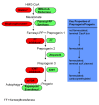
The three therapies currently under investigation for HGPS include: lonafarnib, pravastatin, and zoledronate. For each of these drugs, the target action in HGPS is to inhibit post-translational farnesylation of progerin, the active disease-causing protein in HGPS (see Figure 1).

Figure 1

Figure

Figure 1. Medications that inhibit the farnesylation of progerin

  • Lonafarnib is an investigational farnesyltransferase inhibitor.
  • Pravastatin inhibits HMG-CoA reductase.
  • Zoledronate is a bisphosphonate that inhibits farnesyl pyrophosphate synthase.

Other

Genetics clinics, staffed by genetics professionals, provide information for individuals and families regarding the natural history, treatment, mode of inheritance, and genetic risks to other family members as well as information about available consumer-oriented resources. See the GeneTests Clinic Directory.

Genetic Counseling

Genetic counseling is the process of providing individuals and families with information on the nature, inheritance, and implications of genetic disorders to help them make informed medical and personal decisions. The following section deals with genetic risk assessment and the use of family history and genetic testing to clarify genetic status for family members. This section is not meant to address all personal, cultural, or ethical issues that individuals may face or to substitute for consultation with a genetics professional. To find a genetics or prenatal diagnosis clinic, see the GeneTests Clinic Directory.

Mode of Inheritance

Hutchinson-Gilford progeria syndrome (HGPS) is typically caused by a de novo autosomal dominant mutation.

Risk to Family Members

Parents of a proband

Sibs of a proband

  • Because HGPS is typically caused by a de novo mutation, the risk to the sibs of a proband is small.
  • One instance of apparent somatic and germline mosaicism has been reported [Wuyts et al 2005]. Therefore, the risk to sibs of a proband is estimated to be one in 500.
  • With the exception of two sets of identical twins with HGPS, the authors are unaware of any convincing cases of a family with more than one sib with classic HGPS.

Offspring of a proband. Individuals with HGPS are not known to reproduce.

Other family members of a proband. Because HGPS typically occurs as the result of a de novo mutation, other family members of a proband are not at increased risk.

Related Genetic Counseling Issues

Origin of de novo mutation. As with de novo mutations in achondroplasia, all informative LMNA mutations have been paternal in origin, though the number of families evaluated is small [Eriksson et al 2003]. A paternal age effect is present as the father's age is significantly increased by about five years on average. There is no increase in consanguinity.

DNA banking is the storage of DNA (typically extracted from white blood cells) for possible future use. Because it is likely that testing methodology and our understanding of genes, mutations, and diseases will improve in the future, consideration should be given to banking DNA of affected individuals. See Image testing.jpg for a list of laboratories offering DNA banking.

Prenatal Testing

Prenatal diagnosis for HGPS is possible by analysis of DNA extracted from fetal cells obtained by amniocentesis usually performed at about 15 to 18 weeks' gestation or chorionic villus sampling (CVS) at about ten to 12 weeks' gestation. The disease-causing allele of an affected family member must be identified before prenatal testing can be performed.

Note: (1) Because HGPS has thus far not been reported to recur in families, prenatal testing would only be performed because of the (unlikely) possibility of germline mosaicism in one of the parents. (2) Gestational age is expressed as menstrual weeks calculated either from the first day of the last normal menstrual period or by ultrasound measurements.

Preimplantation genetic diagnosis (PGD) may be available for families in which the disease-causing mutation has been identified. For laboratories offering PGD, see Image testing.jpg.

Note: Because HGPS has thus far not been reported to recur in families, PGD would typically only be considered because of the (unlikely) possibility of germline mosaicism in one of the parents.

Note: It is the policy of GeneReviews to include clinical uses of testing available from laboratories listed in the GeneTests Laboratory Directory; inclusion does not necessarily reflect the endorsement of such uses by the author(s), editor(s), or reviewer(s).

Resources

GeneReviews staff has selected the following disease-specific and/or umbrella support organizations and/or registries for the benefit of individuals with this disorder and their families. GeneReviews is not responsible for the information provided by other organizations. For information on selection criteria, click here.

Molecular Genetics

Information in the Molecular Genetics and OMIM tables may differ from that elsewhere in the GeneReview: tables may contain more recent information. —ED.

Table A. Hutchinson-Gilford Progeria Syndrome: Genes and Databases

Data are compiled from the following standard references: gene symbol from HGNC; chromosomal locus, locus name, critical region, complementation group from OMIM; protein name from UniProt. For a description of databases (Locus Specific, HGMD) to which links are provided, click here.

Table B. OMIM Entries for Hutchinson-Gilford Progeria Syndrome (View All in OMIM)

150330LAMIN A/C; LMNA
176670HUTCHINSON-GILFORD PROGERIA SYNDROME; HGPS

Molecular Basis of Disease

Lamin A is an inner nuclear membrane protein with both structural and cell signaling effects. The single C to T transition at nucleotide 1824 of LMNA does not change the translated amino acid (Gly608Gly), but activates a cryptic splice site, resulting in the deletion of 150 base pairs in the 3’ portion of exon 11. Translation followed by post-translational processing of this altered mRNA produces a shortened abnormal prelamin A protein with a 50 amino-acid deletion near its C-terminal end, henceforth called “progerin”. The 50 amino-acid deletion removes the recognition site that leads to proteolytic cleavage of the terminal 18 amino acids of prelamin A, along with the phosphorylation site(s) involved in the dissociation and reassociation of the nuclear membrane at each cell division.

A key to disease in HGPS is the presumably persistent farnesylation of progerin, which renders it permanently intercalated into the inner nuclear membrane where it can accumulate and exert progressively more damage to cells as they age. That the failure to remove the farnesyl group is at least in part responsible for the phenotypes observed in HGPS is strongly supported by studies on both cell and mouse models which have either been engineered to produce a non-farnesylated progerin product or treated with a drug that inhibits farnesylation, rendering a non-farnesylated progerin product.

Normal allelic variants. The coding region of the lamin A/C gene spans approximately 24 kb and contains 12 exons.

Pathologic allelic variants. A recurrent de novo point mutation of a single-base substitution, a c.1824C>T transition that is a silent mutation that does not change the glycine amino acid at codon 608 within exon 11 in lamin A, was found in 18 of 23 individuals with a clinical diagnosis of HGPS [Eriksson et al 2003] and independently in two of two individuals studied by De Sandre-Giovannoli et al [2003].

One of 25 individuals had a c.1822G>A change at codon 608 (p.Gly608Ser) also leading to the same cryptic splice effect [Eriksson et al 2003].

Two individuals with a heterozygous transition mutation c. 1961+1G>A have been reported; one who died at age 3.5 years of gastroenteritis and pneumonia [Moulson et al 2007] and one who died at age six months [Navarro et al 2004]. This mutation creates a cryptic splice donor sequence that produces an estimated 4.5-fold increase in progerin production versus classic HGPS [Moulson et al 2007].

One individual with a heterozygous transition mutation c.1821G>A (p.Val607Val) has been reported. The individual had a more severe progeroid phenotype than classic HGPS, and died at age 26 days of unspecified genodermatosis with interstitial pneumonia [Moulson et al 2007]. This mutation creates a cryptic splice donor sequence that produces an estimated twofold increase in progerin production vs. classic HGPS [Moulson et al 2007]

A 6-Mb deletion spanning LMNA was reported in an affected individual [Eriksson et al 2003]. Of note, the 6-Mb deletion is not in itself considered pathologic. It was hypothesized that the individual was originally heterozygous for a codon 608 LMNA mutation, but this allele later underwent a deletion removing the codon 608 mutation. This phenomenon was referred to as a “somatic rescue” event.

Table 2. LMNA Pathologic Allelic Variants in Hutchinson-Gilford Progeria Syndrome

DNA Nucleotide ChangeProtein Amino Acid Change Reference Sequences
c.1821G>Ap.Val607ValNM_170707​.2
NP_733821​.1
c.1822G>A p.Gly608Ser
c.1824C>T 1p.Gly608Gly
c.1968+1G>A(Splice donor site mutaton)

See Quick Reference for an explanation of nomenclature. GeneReviews follows the standard naming conventions of the Human Genome Variation Society (www​.hgvs.org).

1. In-frame, exon 11 cryptic splice site activation mutation

Normal gene product. The nuclear lamina is a protein-containing layer attached to the inner nuclear membrane. In mammals, it is composed of a family of polypeptides, with the major components being the lamins A, B1, B2, and C, with molecular weights ranging from 60,000 to 78,000. Lamins A and C are formed by alternative splicing of the LMNA/C gene transcript. Splicing within exon 10 gives rise to lamin C, whereas transcription of all 12 exons gives rise to lamin A. Lamins B1 and B2 are encoded by separate genes and there are no known progeroid mutations within lamins B1 and B2.

Lamin A is normally synthesized as a precursor molecule (prelamin A), and undergoes a four major post-translational processing steps. First, because prelamin A contains a CAAX (cysteine / aliphatic / aliphatic / any amino acid) box at its carboxyl terminus, it is modified by farnesylation. Following farnesylation, cleavage of the last three amino acids, methylation of the C-terminus, and internal proteolytic cleavage occur. Removal of the last 15 coding amino acids along with the CAAX box and farnesyl group generates mature lamin A with 646 amino acids.

Abnormal gene product. The HGPS-causing mutations in codon 608 of LMNA leads to activation of a cryptic splice site within exon 11, resulting in production of a prelamin A that lacks 50 amino acids near the C terminus [Eriksson et al 2003]. The c.1824C>T mutation and consequent abnormal splicing produces a prelamin A that still retains the CAAX box and is therefore farnesylated, but is missing the site for endoproteolytic cleavage of the final 16 amino acids along with the farnesyl moiety that normally occurs during the final step in post-translational processing. The resulting protein, named progerin, is shortened and farnesylated. Since the lipophilic farnesyl moiety is utilized to anchor prelamin (and hence progerin) into the inner nuclear membrane, the lack of farnesyl cleavage likely results in permanent progerin intercalation within the nuclear membrane.

The inability to release progerin from the nuclear membrane results in structural stress on the nucleus. Immunofluorescence of HGPS fibroblasts with antibodies directed against lamin A reveals a visible abnormality, an irregular shape of the nuclear envelope, in 40%-50% of cells [Eriksson et al 2003]. It is hypothesized that this permanently farnesylated mutant form of prelamin A (progerin) acts in a dominant-negative fashion and leads to the progressive defects in nuclear architecture that are seen in HGPS [Goldman et al 2004].

References

Medical Genetic Searches: A specialized PubMed search designed for clinicians that is located on the PubMed Clinical Queries page Image PubMed.jpg

Literature Cited

  1. Cao H, Hegele RA. LMNA is mutated in Hutchinson-Gilford progeria (MIM 176670) but not in Wiedemann-Rautenstrauch progeroid syndrome (MIM 264090). J Hum Genet. 2003;48:271–4. [PubMed: 12768443]
  2. Caux F, Dubosclard E, Lascols O, Buendia B, Chazouilleres O, Cohen A, Courvalin JC, Laroche L, Capeau J, Vigouroux C, Christin-Maitre S. A new clinical condition linked to a novel mutation in lamins A and C with generalized lipoatrophy, insulin-resistant diabetes, disseminated leukomelanodermic papules, liver steatosis, and cardiomyopathy. J Clin Endocrinol Metab. 2003;88:1006–13. [PubMed: 12629077]
  3. Chen L, Lee L, Kudlow BA, Dos Santos HG, Sletvold O, Shafeghati Y, Botha EG, Garg A, Hanson NB, Martin GM, Mian IS, Kennedy BK, Oshima J. LMNA mutations in atypical Werner's syndrome. Lancet. 2003;362:440–5. [PubMed: 12927431]
  4. De Sandre-Giovannoli A, Bernard R, Cau P, Navarro C, Amiel J, Boccaccio I, Lyonnet S, Stewart CL, Munnich A, Le Merrer M, Levy N. Lamin A truncation in Hutchinson-Gilford progeria. Science. 2003;300:2055. [PubMed: 12702809]
  5. Denecke J, Brune T, Feldhaus T, Robenek H, Kranz C, Auchus RJ, Agarwal AK, Marquardt T. A homozygous ZMPSTE24 null mutation in combination with a heterozygous mutation in the LMNA gene causes Hutchinson-Gilford progeria syndrome (HGPS): insights into the pathophysiology of HGPS. Hum Mutat. 2006;27:524–31. [PubMed: 16671095]
  6. Eriksson M, Brown WT, Gordon LB, Glynn MW, Singer J, Scott L, Erdos MR, Robbins CM, Moses TY, Berglund P, Dutra A, Pak E, Durkin S, Csoka AB, Boehnke M, Glover TW, Collins FS. Recurrent de novo point mutations in lamin A cause Hutchinson-Gilford progeria syndrome. Nature. 2003;423:293–8. [PubMed: 12714972]
  7. Fukuchi KI, Katsuya T, Sugimoto K, Kuremura M, Kim HD, Li L, Ogihara T. LMNA mutation in a 45-year-old Japanese with Hutchinson-Gilford progeria syndrome. J Med Genet. 2004;41:e67. [PMC free article: PMC1735754] [PubMed: 15121795]
  8. Gilford H. Ateliosis and progeria: continuous youth and premature old age. Brit Med J. 1904;2:914–8.
  9. Goldman RD, Shumaker DK, Erdos MR, Eriksson M, Goldman AE, Gordon LB, Gruenbaum Y, Khuon S, Mendez M, Varga R, Collins FS. Accumulation of mutant lamin A causes progressive changes in nuclear architecture in Hutchinson-Gilford progeria syndrome. Proc Natl Acad Sci U S A. 2004;101:8963–8. [PMC free article: PMC428455] [PubMed: 15184648]
  10. Gordon LB, Harten IA, Calabro A, Sugumaran G, Csoka AB, Brown WT, Hascall V, Toole BP. Hyaluronan is not elevated in urine or serum in Hutchinson-Gilford progeria syndrome. Hum Genet. 2003;113:178–87. [PubMed: 12728312]
  11. Gordon LB, Harten IA, Patti ME, Lichtenstein AH. Reduced adiponectin and HDL cholesterol without elevated C-reactive protein: clues to the biology of premature atherosclerosis in Hutchinson-Gilford Progeria Syndrome. J Pediatr. 2005;146:336–41. [PubMed: 15756215]
  12. Hutchinson J. Case of congenital absence of hair, with atrophic condition of the skin and its appendages, in a boy whose mother had been almost wholly bald from alopecia areata from the age of six. Lancet. 1886;I:923. [PMC free article: PMC2121576] [PubMed: 20896687]
  13. Kirschner J, Brune T, Wehnert M, Denecke J, Wasner C, Feuer A, Marquardt T, Ketelsen UP, Wieacker P, Bonnemann CG, Korinthenberg R. p.S143F mutation in lamin A/C: a new phenotype combining myopathy and progeria. Ann Neurol. 2005;57:148–51. [PubMed: 15622532]
  14. Moulson CL, Fong LG, Gardner JM, Farber EA, Go G, Passariello A, Grange DK, Young SG, Miner JH. Increased progerin expression associated with unusual LMNA mutations causes severe progeroid syndromes. Hum Mutat. 2007;28(9):882–9. [PubMed: 17469202]
  15. Navarro CL, De Sandre-Giovannoli A, Bernard R, Boccaccio I, Boyer A, Genevieve D, Hadj-Rabia S, Gaudy-Marqueste C, Smitt HS, Vabres P, Faivre L, Verloes A, Van Essen T, Flori E, Hennekam R, Beemer FA, Laurent N, Le Merrer M, Cau P, Levy N. Lamin A and ZMPSTE24 (FACE-1) defects cause nuclear disorganization and identify restrictive dermopathy as a lethal neonatal laminopathy. Hum Mol Genet. 2004;13:2493–503. [PubMed: 15317753]
  16. Plasilova M, Chattopadhyay C, Pal P, Schaub NA, Buechner SA, Mueller H, Miny P, Ghosh A, Heinimann K. Homozygous missense mutation in the lamin A/C gene causes autosomal recessive Hutchinson-Gilford progeria syndrome. J Med Genet. 2004;41:609–14. [PMC free article: PMC1735873] [PubMed: 15286156]
  17. Wuyts W, Biervliet M, Reyniers E, D'Apice MR, Novelli G, Storm K. Somatic and gonadal mosaicism in Hutchinson-Gilford progeria. Am J Med Genet A. 2005;135:66–8. [PubMed: 15793835]

Published Statements and Policies Regarding Genetic Testing

  1. Progeria Research Foundation. The Progeria Handbook: A Guide for Families & Health Care Providers of Children with Progeria. Includes genetic testing guidelines. Available at www​.progeriaresearch.org (pdf). Accessed 1-4-11.

Suggested Reading

  1. Capell BC, Collins FS. Human laminopathies: nuclei gone genetically awry. Nat Rev Genet. 2006;7:940–52. [PubMed: 17139325]
  2. Capell BC, Collins FS, Nabel EG. Mechanisms of cardiovascular disease in accelerated aging, syndromes. Circ Res. 2007;101(1):13–26. [PubMed: 17615378]
  3. DeBusk FL. The Hutchinson-Gilford progeria syndrome. Report of 4 cases and review of the literature. J Pediatr. 1972;80:697–724. [PubMed: 4552697]
  4. Merideth MA, Gordon LB, Clauss S, Sachdev V, Smith AC, Perry MB, Brewer CC, Zalewski C, Kim HJ, Solomon B, Brooks BP, Gerber LH, Turner ML, Domingo DL, Hart TC, Graf J, Reynolds JC, Gropman A, Yanovski JA, Gerhard-Herman M, Collins FS, Nabel EG, Cannon RO, Gahl WA, Introne WJ. Phenotype and course of Hutchinson-Gilford progeria syndrome. N Engl J Med. 2008;358:592–604. [PMC free article: PMC2940940] [PubMed: 18256394]

Chapter Notes

Author Notes

Dr. Gordon is involved in progeria clinical treatment trials being conducted at Children’s Hospital Boston. For more information please contact Dr. Gordon at Leslie_Gordon@brown.edu.

Revision History

  • 6 January 2011 (me) Comprehensive update posted live
  • 10 August 2006 (me) Comprehensive update posted to live Web site
  • 30 July 2004 (cd) Revision: Prenatal Testing
  • 11 February 2004 (wtb) Revision: sequence analysis of entire coding region now available
  • 12 December 2003 (me) Review posted to live Web site
  • 31 July 2003 (wtb) Original submission
Copyright © 1993-2013, University of Washington, Seattle. All rights reserved.
Cover of GeneReviews™
GeneReviews™ [Internet].
Pagon RA, Bird TD, Dolan CR, et al., editors.
Seattle (WA): University of Washington, Seattle; 1993-.

Related to this GeneReview

Tests in GTR by Gene

Tests in GTR by Condition

Related information

  • MedGen
    Related information in MedGen
  • OMIM
    Related OMIM records
  • PubMed
    Links to pubmed
  • Gene
    Gene records cited in chapters on the NCBI bookshelf. Links are provided by the authors or the NCBI Bookshelf staff.

Related citations in PubMed

See reviews...See all...

Recent Activity

Your browsing activity is empty.

Activity recording is turned off.

Turn recording back on

See more...